
How a quirky data visualization project became the ultimate tool for understanding music discovery
If you've ever wondered how Spotify decides which songs to serve up in your Discover Weekly or Release Radar, you're not alone. The streaming giant's algorithm is one of the most closely guarded secrets in the music industry - but what if I told you there's a hidden tool that can help you reverse engineer it?
Enter Every Noise at Once - a mind-bending data visualization project that maps the entire musical universe as Spotify sees it. And for savvy artists and labels, it's become an unexpected goldmine for algorithmic intelligence.
What the Hell is Every Noise at Once?
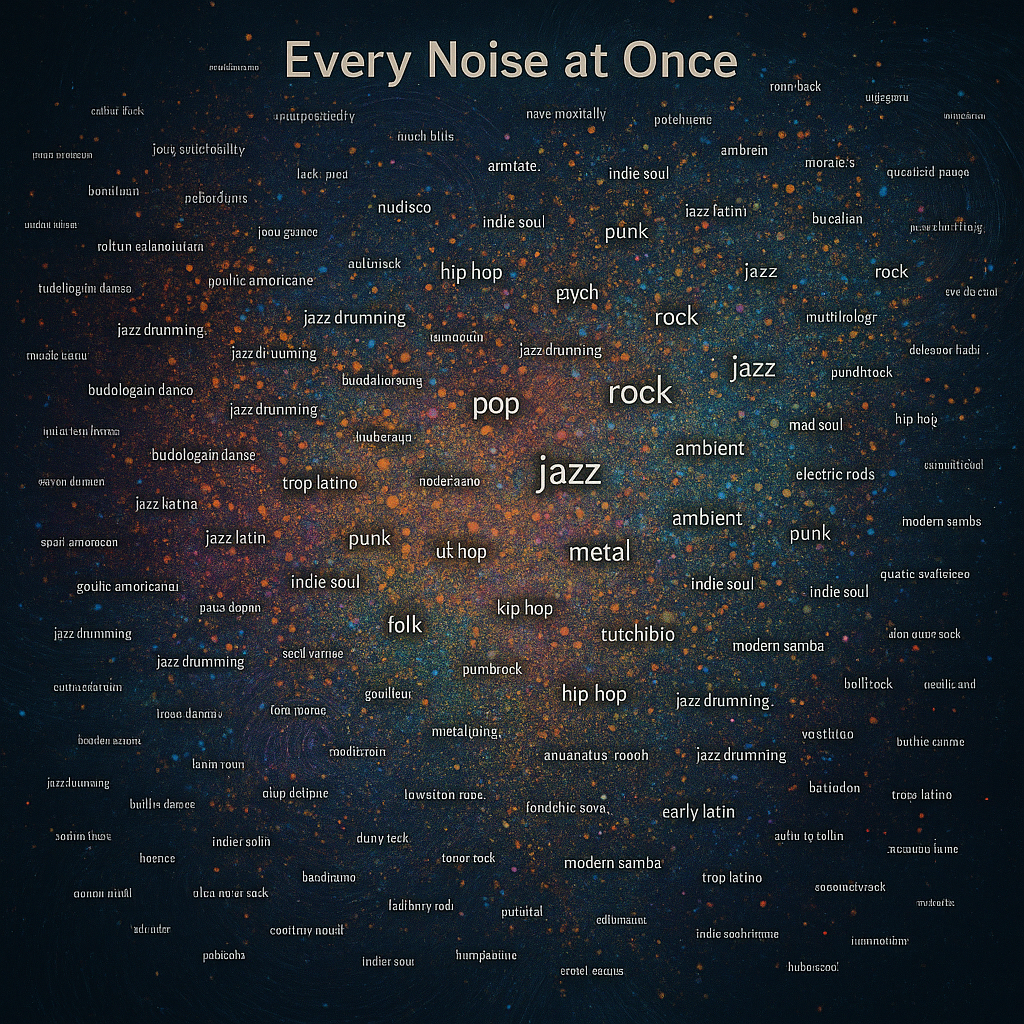
Created by Spotify's own Glenn McDonald, Every Noise at Once (everynoise.com) is essentially a sonic map of every genre Spotify recognizes - all 6,000+ of them. It looks like someone threw musical spaghetti at a wall and somehow made it make sense.
But here's where it gets interesting: this isn't just a cool visualization. It's a direct window into Spotify's genre classification system - the same system that powers their recommendation engine.
The Algorithm Archaeology
Think of Every Noise at Once as your archaeological dig site for Spotify's algorithm. Here's what you can uncover:
1. Genre Proximity = Playlist Proximity
The closer two genres appear on the map, the more likely Spotify is to cross-pollinate between them in playlists and recommendations. If your indie folk track sits near "chamber pop" and "neo-psychedelic," guess where your algorithmic opportunities lie?
2. The Micro-Genre Goldmine
Spotify doesn't just see "rock" - it sees "math rock," "post-rock," "kraut rock," and about 47 other variations. Each micro-genre represents a potential algorithmic pathway. The more specific you can get with your sound, the better you can target these niches.
3. Trending Genre Clusters
Watch how genres move and cluster over time. New genres appearing near established ones often signal algorithmic shifts. When "bedroom pop" started creeping toward "indie pop" territory, smart artists pivoted their sound accordingly.
Practical Reverse Engineering Tactics
The Genre Mapping Strategy
- Find Your Home Base: Locate where your current releases sit on the map
- Identify Your Neighbors: What genres are within spitting distance?
- Study the Pathways: How do listeners typically flow between these genres?
- Plan Your Migration: Gradually incorporate elements that pull you toward high-traffic genre intersections
The Playlist DNA Analysis
Every Noise at Once reveals the genre DNA of Spotify's editorial playlists. Cross-reference your target playlists with the genre map to understand exactly what sonic elements they're looking for.
The Algorithmic Sweet Spot Hunt
Look for genres that are:
- Close to your current position
- Have high listener engagement (indicated by font size)
- Show recent growth patterns
- Connect multiple genre clusters
Real-World Application: The Case Study
Let's say you're an indie artist currently tagged as "indie folk." Looking at the map, you notice "folk-pop" sits right between indie folk and the massive "pop" cluster. By gradually incorporating more pop sensibilities - maybe a stronger hook, tighter production, or catchier melodies - you can migrate toward that sweet spot where indie credibility meets mainstream algorithmic love.
The Dark Arts of Metadata Manipulation
Here's where it gets spicy: Every Noise at Once essentially shows you Spotify's genre taxonomy. This means you can reverse engineer the metadata tags that trigger specific algorithmic pathways.
Pro tip: Don't just submit your track as "indie rock." Study the map, find the micro-genres that bridge your sound to bigger opportunities, and craft your metadata accordingly. "Math rock" might have fewer monthly listeners than "indie rock," but if it's the bridge to "post-rock" and "experimental," you've just opened three algorithmic doors instead of one.
The Future of Algorithmic Gaming
As AI becomes more sophisticated, tools like Every Noise at Once become more valuable, not less. They reveal the underlying logic structures that even advanced machine learning systems rely on. Understanding these patterns gives you a roadmap for creating music that doesn't just sound good - it gets found.
The Bottom Line
Every Noise at Once isn't just a cool data visualization - it's a reverse engineering toolkit for one of the most important discovery mechanisms in modern music. While other artists are throwing spaghetti at the wall hoping something sticks, you can use this tool to understand exactly where the wall is and what kind of spaghetti it prefers.
The algorithm isn't magic - it's math. And now you have the map to navigate it.
Want to dive deeper into algorithmic strategy? The music industry is evolving faster than ever, and the artists who understand the underlying systems are the ones who'll thrive. Don't just make music - make music that gets discovered.
#SpotifyAlgorithm #MusicMarketing #StreamingStrategy #MusicDiscovery #IndieMusic #MusicBusiness #DigitalMarketing #MusicPromotion #EveryNoiseAtOnce #MusicData #AlgorithmHacking #ReverseEngineering #MusicAnalytics #DataVisualization #MusicTech #StreamingData #IndieArtist #MusicLabel #ArtistTips #MusicIndustryTips #DIYMusic #MusicStrategy #ArtistDevelopment #MusicConsulting