
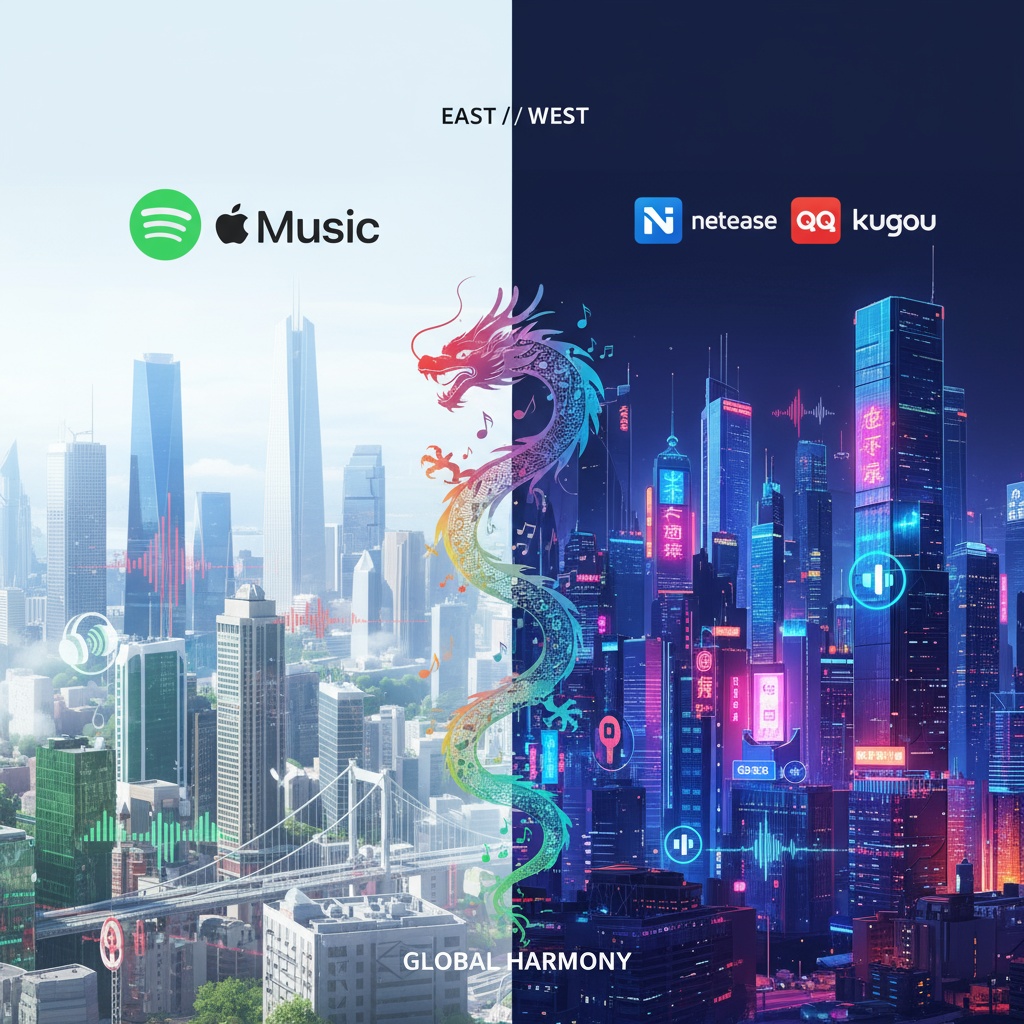
Let's talk about the elephant in the room—or more accurately, the dragon in the digital streaming space. While you're obsessing over your Spotify for Artists dashboard and refreshing Apple Music Connect, there's a massive market you're probably ignoring: China.
With over 1.4 billion people and a rapidly growing middle class that's hungry for music, China represents one of the most significant opportunities for independent artists looking to expand internationally. But here's the catch: Spotify doesn't operate there, and Apple Music has limited penetration. The Chinese streaming ecosystem operates on entirely different platforms with different rules, different payment structures, and different cultural expectations.
If you're serious about international growth—and you should be—understanding Chinese DSPs isn't optional anymore. It's essential.
The Major Players: China's DSP Landscape
Unlike the Western market where Spotify and Apple Music dominate, China's streaming landscape is fragmented across several major platforms. Here are the heavy hitters you need to know:
Tencent Music Entertainment (TME)
Tencent Music Entertainment is the undisputed king of Chinese music streaming, operating three major platforms under one corporate umbrella:
QQ Music: The flagship platform with over 600 million monthly active users. Think of it as China's Spotify, but with social features baked in. Users can share playlists, comment on songs, and interact with artists directly through the platform.
Kugou Music: Originally focused on younger audiences and more pop-oriented content, Kugou boasts around 450 million monthly users. It's particularly strong in tier-2 and tier-3 cities.
Kuwo Music: The third pillar of TME's empire, with approximately 200 million monthly users. Kuwo has traditionally been strong in the karaoke and live streaming space.
NetEase Cloud Music
NetEase Cloud Music is TME's primary competitor, with roughly 180 million monthly active users. What sets NetEase apart is its community-driven approach—users leave thousands of comments on songs, creating a social experience around music discovery. If TME is about scale, NetEase is about engagement and curation.
Migu Music
Owned by China Mobile, Migu Music leverages its parent company's massive telecom subscriber base. With around 150 million users, it's smaller than TME and NetEase but shouldn't be ignored, especially since it comes bundled with many mobile phone plans.
How Chinese DSPs Differ from Spotify and Apple Music
If you're expecting Chinese DSPs to work like Western platforms, you're in for a surprise. Here are the fundamental differences:
Payment Models: Freemium on Steroids
While Spotify operates on a freemium model with ads for free users, Chinese DSPs take this concept further. Most content is available for free, but premium features include:
High-quality audio streaming (lossless formats)
Early access to new releases
Exclusive content and live streams
Digital album purchases and virtual gifts for artists
Karaoke features and lyrics
The kicker? Royalty rates are generally lower than Western platforms, but the sheer volume of users can compensate. You're playing a volume game here.
Social Integration: Music as Community
Chinese DSPs blur the line between streaming platform and social network. Users don't just listen—they comment, share, create playlists collaboratively, and interact with artists through built-in messaging and live streaming features. Your music isn't just content; it's a conversation starter.
NetEase Cloud Music, in particular, has become famous for its comment sections, where users share personal stories related to songs. Some comments have gone viral, driving millions of streams to previously unknown tracks.
Licensing and Exclusivity
Here's where it gets complicated. Chinese DSPs have historically competed through exclusive licensing deals. While this practice has loosened somewhat due to regulatory pressure, exclusivity windows and preferential treatment still exist.
Unlike Spotify, where you can distribute through any aggregator and reach the platform, Chinese DSPs often require specific distribution partnerships or direct deals for optimal placement and promotion.
Karaoke and Interactive Features
Karaoke culture is massive in China, and DSPs reflect this. Most platforms include karaoke modes, lyric videos, and user-generated covers. Your song isn't just for listening—it's for singing, remixing, and reimagining.
Payment Processing and Currency
Chinese DSPs operate primarily in RMB (yuan) and use local payment systems like WeChat Pay and Alipay. Royalty payments to international artists typically go through intermediaries and may involve currency conversion fees and longer payment cycles than Western platforms.
How to Get Your Music on Chinese DSPs
Now for the practical stuff. Getting your music into China requires a different approach than your standard DistroKid or TuneCore upload. Here's your roadmap:
Step 1: Choose the Right Distribution Partner
Not all digital distributors have relationships with Chinese DSPs. You'll need a distributor with established connections in China. Some options include:
Believe Digital: Strong presence in Asia with direct relationships with major Chinese platforms
TuneCore: Offers distribution to some Chinese platforms, though coverage isn't comprehensive
FUGA: Enterprise-level distribution with Chinese market expertise
Local Chinese distributors: Companies like Taihe Music Group or Rock Music offer direct access but may require Mandarin language capabilities
The distribution fee structure varies, but expect to pay either a percentage of royalties (typically 15-25%) or an annual fee per release.
Step 2: Prepare Your Metadata—In Mandarin
Here's where most international artists drop the ball. Chinese DSPs require metadata in Simplified Chinese characters. That means:
Artist name translated or transliterated into Mandarin
Song titles in Chinese (translation or transliteration)
Album titles in Chinese
Genre classifications that make sense in the Chinese market
Don't use Google Translate for this. Hire a professional translator who understands music terminology and cultural nuances. A bad translation can make your artist name unintentionally hilarious or offensive.
Step 3: Understand Content Restrictions
China has strict content regulations. Songs containing explicit content, political themes, or references to sensitive topics may be rejected or censored. Before submitting, review your lyrics for:
Explicit language or sexual content
Political commentary or criticism of government
References to banned topics (Tibet, Taiwan independence, etc.)
Drug references
Excessive violence
This doesn't mean you need to self-censor your entire catalog, but be strategic about which releases you prioritize for the Chinese market.
Step 4: Optimize Your Release Strategy
Timing matters in China. Consider:
Chinese New Year: Major consumption period, but also highly competitive
Singles Day (November 11): Originally a shopping holiday, now a major entertainment consumption day
Summer months: Peak streaming season for younger audiences
Avoid major political events: Streaming platforms may reduce promotion during sensitive periods
Release your music simultaneously across all major Chinese platforms when possible. Unlike the West, where Spotify dominance is clear, Chinese users are split across multiple platforms, and you need presence everywhere.
Step 5: Invest in Localized Promotion
Getting your music on Chinese DSPs is only half the battle. Discovery is the real challenge. Consider:
Playlist pitching: Chinese platforms have curated playlists, but the pitching process differs from Spotify. You'll likely need a local representative or label partner.
Social media integration: Promote your releases on Weibo (China's Twitter) and Douyin (Chinese TikTok). Cross-platform promotion is essential.
Influencer partnerships: Chinese KOLs (Key Opinion Leaders) can drive massive streaming numbers if they feature your music.
Live streaming: Many DSPs have built-in live streaming features. Hosting a live performance or Q&A can boost visibility dramatically.
The Reality Check: Is It Worth It?
Let's be honest—breaking into the Chinese market isn't easy, and it's not cheap. You'll need investment in translation, distribution partnerships, and localized marketing. Royalty rates are lower than Western platforms, and payment cycles can be longer.
But here's the thing: the market is massive, growing, and increasingly sophisticated. Chinese consumers are developing taste for international music beyond K-pop and mainstream Western hits. There's room for independent artists who approach the market strategically and respectfully.
If you're already seeing algorithmic traction in other Asian markets—Taiwan, Hong Kong, Singapore, Malaysia—China is the logical next step. The cultural and linguistic connections make cross-promotion more effective.
The Bottom Line
Chinese DSPs represent a frontier market for independent artists willing to do the work. It's not a "set it and forget it" situation like uploading to Spotify. It requires cultural sensitivity, strategic investment, and patience.
But if you're serious about building a truly international career—and not just paying lip service to "global reach"—you can't ignore a market with over a billion potential listeners.
The question isn't whether you should target Chinese DSPs. The question is: what's your strategy for getting there, and are you willing to invest in doing it right?
Because half-assing it won't work. The Chinese music market rewards artists who show up with intention, cultural respect, and a long-term commitment. Do that, and you might just find your next major audience lives 7,000 miles away from where you thought they'd be.
Ready to expand your reach into Asian markets? Understanding algorithmic health and international streaming strategy is crucial for independent artists looking to scale globally. The future of music isn't just Western—it's worldwide.
#ChineseDSPs #MusicStreaming #IndependentArtists #MusicDistribution #GlobalMusic #AsianMarkets #MusicBusiness #InternationalMusic #MusicMarketing #IndieMusic #QQMusic #NetEaseCloudMusic #KugouMusic #TencentMusic #MiguMusic #SpotifyAlternatives #MusicIndustry #DigitalDistribution