
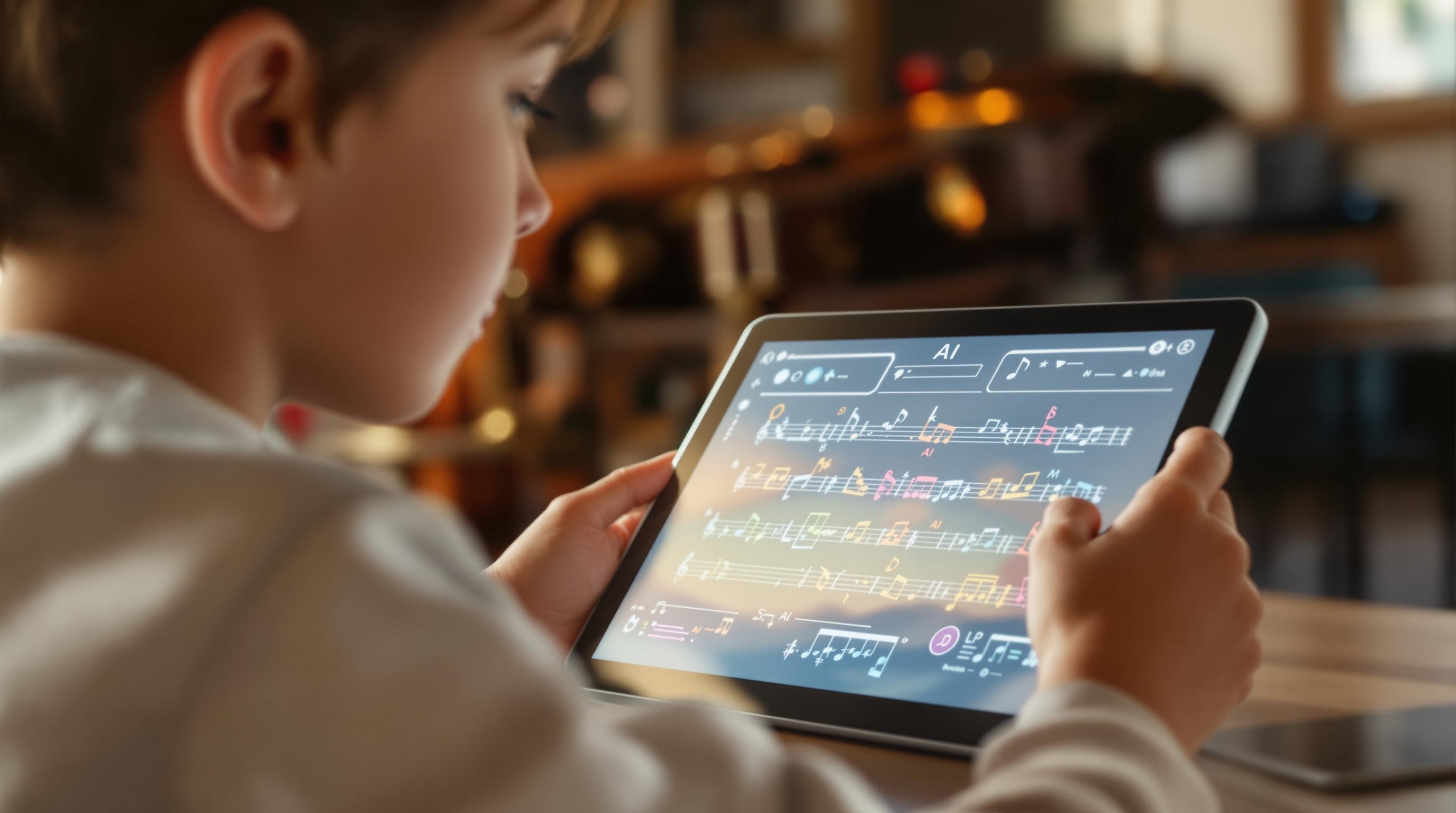
In the halls of Bogotá's public schools, a remarkable transformation has taken place. Just two decades ago, music education had virtually disappeared from the curriculum. Today, 100,000 students are studying music, thanks to innovative educational policies. But what about schools that can't afford such ambitious programs? This is where artificial intelligence enters the scene, offering a revolutionary solution to bring music education back to schools without breaking the bank.
The Value of Music Education
History has shown us that music education isn't just about creating musicians – it's about building better learners, creative thinkers, and more engaged students. Take Finland's example, where music education is considered part of their "DNA," resulting in not just better musicians, but more well-rounded students overall.
How AI Can Transform Music Education
1. Personalized Learning at Scale
- AI-powered platforms can adapt to each student's pace and learning style
- Virtual instructors can provide immediate feedback on rhythm, pitch, and technique
- Automated practice sessions can supplement in-person instruction
2. Cost-Effective Solutions
- Reduced need for expensive instruments through digital alternatives
- Lower per-student costs through AI-assisted group learning
- Efficient resource allocation based on student progress and needs
3. Accessibility and Inclusion
- 24/7 availability of learning resources
- Accommodation for different learning styles and abilities
- Remote learning options for schools without full-time music teachers
4. Enhanced Assessment and Progress Tracking
- Real-time performance analysis
- Data-driven insights for teachers
- Automated progress reports and achievement tracking
Making It Work: A Hybrid Approach
The key isn't to replace human teachers but to augment their capabilities. AI can handle the repetitive aspects of music education – scales, rhythm training, basic theory – while teachers focus on nurturing creativity, expression, and ensemble work.
Implementation Strategies:
1. Start Small
- Begin with pilot programs in select classes
- Use AI tools for basic music theory and ear training
- Gradually expand based on results and feedback
2. Leverage Existing Technology
- Use smartphones and tablets students already have
- Implement cloud-based learning platforms
- Utilize AI-powered apps for practice and assessment
3. Build Community Partnerships
- Partner with local music organizations
- Seek technology grants and sponsorships
- Create shared resource programs between schools
The Future of Music Education
As we look to the future, the combination of traditional music education and AI technology offers an exciting opportunity to make music education accessible to all students, regardless of their school's budget or location. By embracing these innovations, we can ensure that the next generation has access to the transformative power of music education.
Call to Action:
Are you an educator or administrator interested in bringing music education back to your school? Start by exploring AI-powered music education platforms and connecting with schools that have successfully implemented these programs.
#AIMusic #MusicEducation #EdTech #AIinEducation #MusicTech #MusicInnovation #DigitalEducation #FutureOfMusic #MusicTechnology #ArtificialIntelligence #MusicalAI #LearningInnovation #EdTechTrends #MusicLearning #DigitalLearning