
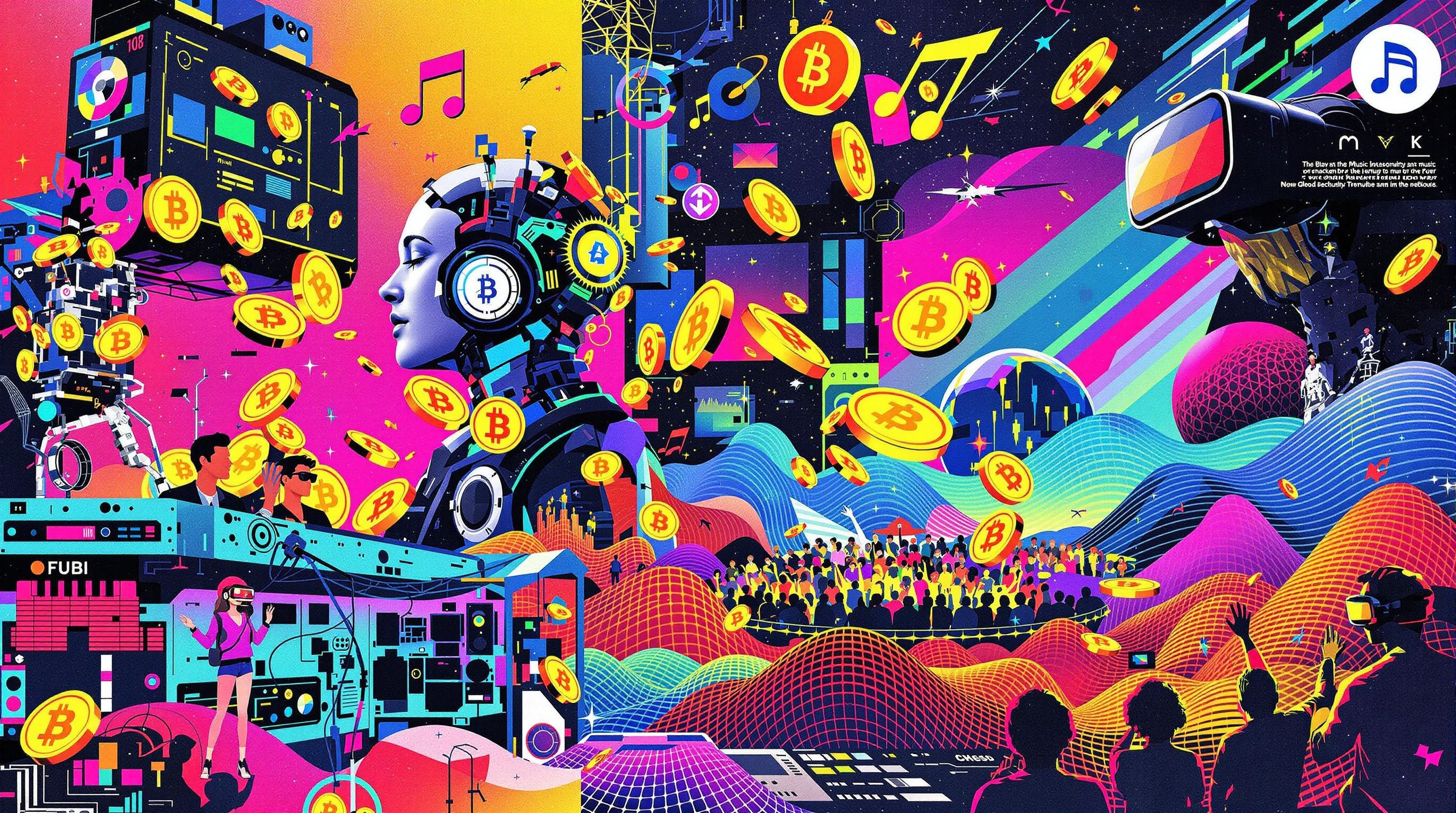
The music industry stands at a pivotal crossroads in 2025, with emerging technologies poised to fundamentally transform how music is created, distributed, and experienced over the next two years. Drawing from current trends and innovations, this essay explores the technological forces that will reshape the musical landscape through 2027.
AI Integration: From Collaboration to Creation
The integration of artificial intelligence in music production will accelerate dramatically by 2027. What began as basic algorithmic composition tools will evolve into sophisticated creative partners for artists. The AI music market, projected to reach $38.71 billion by 2033, is already showing signs of this transformation.
Artists will increasingly adopt AI as a collaborative tool rather than viewing it as a replacement. This human-AI partnership will enable unprecedented creative possibilities, allowing musicians to experiment with novel sounds and compositions while maintaining their artistic vision. As one industry expert notes, "The blurring lines between human and machine-generated artistry are pushing the boundaries of what is considered music and authorship."
However, this evolution brings ethical considerations to the forefront. Questions of ownership, creative attribution, and fair compensation will necessitate new frameworks for protecting artists' rights while encouraging innovation. The industry will need to establish clear guidelines for AI-assisted music creation that balance technological advancement with artistic integrity.
Blockchain Revolution: Redefining Ownership and Distribution
Blockchain technology will fundamentally alter how music is distributed and monetized by 2027. The technology's ability to create verifiable digital scarcity through NFTs (Non-Fungible Tokens) will open new revenue streams for artists beyond traditional streaming models.
Smart contracts embedded in blockchain platforms will enable automatic, transparent royalty distributions, potentially solving the long-standing issue of fair compensation in the digital age. Artists will be able to directly connect with fans, offering exclusive experiences and content without intermediaries taking substantial cuts of their earnings.
This democratization of the industry will further empower independent artists and boutique labels, challenging the dominance of major record companies. The rise of Musical Blockchain integration will create new paradigms for artist-fan relationships, with direct patronage models becoming increasingly viable alternatives to traditional industry structures.
Immersive Experiences: Beyond Traditional Consumption
By 2027, music consumption will transcend current streaming platforms through immersive technologies. Virtual and augmented reality will transform how audiences experience live performances, creating hybrid physical-digital concert experiences that can be accessed globally.
These technologies will enable synchronous performances across geographical boundaries, fostering real-time collaboration between artists from different cultures and further enriching the musical landscape. Festival organizers will increasingly explore new formats and technologies to meet audience demands for innovative and immersive experiences.
The integration of spatial audio and haptic feedback will create multisensory music experiences, allowing listeners to physically feel the music in unprecedented ways. This evolution will drive new hardware and software development specifically designed for immersive music consumption.
Data-Driven Industry: Analytics and Personalization
Advanced music analytics will become essential tools for artists and labels by 2027. These platforms will provide unprecedented insights into listener behavior, enabling highly targeted marketing strategies and personalized fan experiences.
AI-powered catalog monitoring systems will optimize music visibility across platforms, analyzing performance metrics to maximize reach and engagement. This data-driven approach will allow artists to identify emerging trends and adapt their creative and marketing strategies accordingly.
However, the increasing reliance on algorithms raises concerns about the homogenization of musical styles. As platforms prioritize content based on engagement metrics, there's a risk that diverse artistic expressions may be overshadowed by mainstream sounds. The industry will need to balance algorithmic optimization with the preservation of musical diversity.
Sustainability and Ethical Considerations
Environmental sustainability will become a central concern for the music industry by 2027. From eco-friendly production methods to carbon-neutral concert logistics, the industry will increasingly adopt practices that minimize its environmental impact.
Initiatives like carbon offsets for digital releases and NFTs will become standard practice, reflecting growing consumer demand for environmentally responsible entertainment. This shift will influence everything from physical merchandise production to streaming infrastructure.
The industry will also grapple with ethical questions surrounding data privacy, algorithmic bias, and the social impact of music technology. Transparent practices and responsible innovation will become competitive advantages as consumers increasingly consider ethical factors in their entertainment choices.
Conclusion: A New Musical Paradigm
The next two years will witness a fundamental transformation of the music industry through technological innovation. While these changes present significant challenges to established business models, they also offer unprecedented opportunities for creativity, accessibility, and artist empowerment.
The most successful artists and companies will be those who embrace these technologies while maintaining a human-centered approach to music creation and distribution. As the boundaries between creator, technology, and audience continue to blur, the essence of music as a form of human expression and connection will remain its most valuable aspect.
The future of music lies not in technology replacing human creativity, but in the thoughtful integration of these tools to enhance and expand the possibilities of musical expression. The coming years will reveal how this delicate balance shapes the next chapter of our musical evolution.
#MusicTech2025 #AIMusic #BlockchainMusic #MusicIndustryFuture #MusicInnovation #AICreators #MusicalBlockchain #VirtualConcerts #ImmersiveAudio #MusicNFTs #SpatialAudio #MusicEvolution #FutureOfSound #MusicProducers #IndieArtistTech #MusicTechRevolution